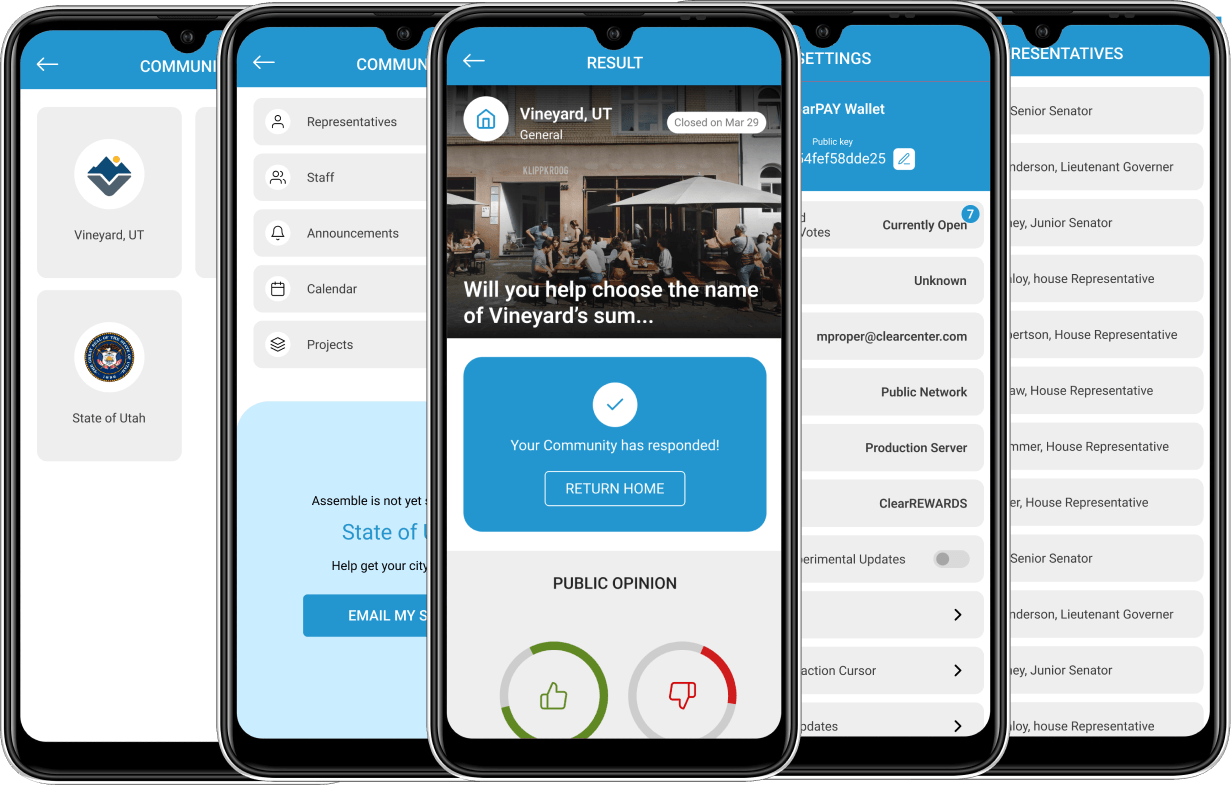
Digital Voting uses decentralized technology to support a transparent voting process, with participation and results visible to voters. It's designed to help reduce fraudulent or duplicate votes, though no voting system can eliminate every risk.
Digital Voting aims to give members of the Digital World community a transparent, verifiable way to participate in decisions relevant to their Digital Communities and Digital Organizations.
In the Digital World, members can have a voice and a vote in polls and decisions relevant to the Digital Communities and Digital Organizations they belong to. Voting records and results are visible to participants, which is designed to support transparency.
Whether it's a Digital Community decision or an informal group poll, results are available to participants in real time.
Members can participate in polls and voting relevant to the Digital Communities and Digital Organizations they belong to.
See poll and voting results update in real time, without waiting on a separate manual tallying or reporting step.
No. Digital Voting supports polling and decision-making within Digital Communities, Digital Organizations, and Digital Councils. It is not a government election system, and participating in a Digital Voting poll is not the same as voting in a governmental or legally binding public election.
Digital Voting is designed to link votes to a Digital Identity and make participation and results visible to voters, which is intended to make duplicate or fraudulent activity easier to notice. As with any voting system, this reduces risk but cannot guarantee it is eliminated entirely.
Voting rules depend on how the Digital Community, Digital Organization, or Digital Council running a particular poll has set them up. Check the specific poll or the governing rules of that group to see how votes are weighted and who is eligible.
Digital Voting's transparency features are designed to make tampering easier to detect, but no system can claim to be completely immune to manipulation. Results and participation records remain visible so anomalies can be reviewed.
Digital Communities, Digital Organizations, and Digital Councils can set up polls for their members. Eligibility to vote in a given poll depends on that group's own membership and governance rules.
Disclaimer: Digital Voting supports polling and decision-making for Digital Communities, Digital Organizations, and Digital Councils within the Digital World. It is not an official government election system, and participating in a Digital Voting poll does not constitute voting in a governmental, civic, or legally binding public election. Where a Digital Community's own governance rules set a specific voting method or threshold, those rules apply.