Digital Nations is the historical name of a Digital World initiative that supports regional participation, community collaboration, and jurisdictional partnerships. It does not represent sovereign nations, legal citizenship, or government authority. Participation occurs through organizations, communities, and regions that adopt Digital World services.
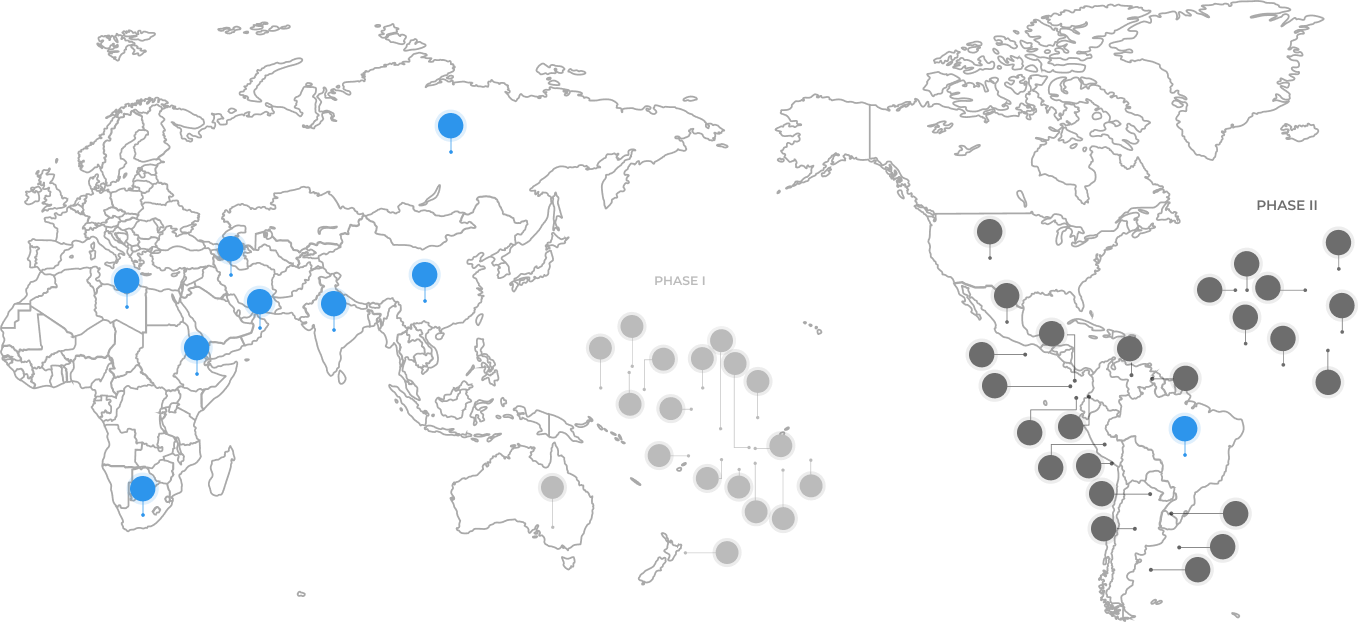
Digital World expands through regional pilots and community adoption, organized into broader regional unions. Each phase brings new communities, organizations, and jurisdictions into the network.
Regional pilots and community programs underway
Continued regional expansion as adoption grows
Digital Nations is not a form of citizenship or a claim of government partnership. It's how Digital World organizes regional participation - the pilots, community programs, and jurisdictional relationships that bring the network to new places.
Bringing a global network to specific places usually means building separate relationships and infrastructure for every region from scratch.
Organizations, communities, providers, and councils in a region adopt Digital World's tools and connect them to local needs.
Cities, regional organizations, educational institutions, nonprofits, and service providers can all take part, alongside individual members.
Regional pilot programs and community adoption in the areas covered by Digital World's regional unions.
Digital World's regional deployment is organized into broader regional groupings, each reflecting different community needs, jurisdictions, and stages of adoption. These groupings are illustrative and do not represent official political or governmental entities.
Cultural sovereignty, community identity, and regional digital infrastructure.
Digital infrastructure, trusted services, and regional modernization.
Cities, states, communities, and private providers building adoption across the Americas.
Mobile-first identity, community growth, and service access. In development.
Digital rights, identity interoperability, and regulated service adoption. In development.
Regional participation happens through the organizations, providers, and communities operating within each region - not through direct citizenship or national membership.
Digital Nations connects to several other parts of the network.
Geographic and political groupings - such as the Pacific Union or Americas Union - that regional participation happens within.
Groups of members organized around shared interests or goals, active within participating regions.
Member-governed structures that businesses, nonprofits, and public bodies register to operate within a region.
Companies and services recommended, authorized, or registered to operate within a region.
Groups that consult, deliberate, and make governance decisions, including at a regional level.
The member app used to create a Digital Identity and access services within a participating region.
Regional participation is open to a range of groups working within a given area.
Local or interest-based groups participating in a region's Digital World adoption.
Municipal and local government bodies exploring regional digital infrastructure.
Organizations coordinating adoption or services across a region.
Schools and universities participating in regional programs.
Nonprofits using regional infrastructure to support their communities.
Recommended, authorized, or registered providers operating within a region.
Disclaimer: Digital Nations does not create legal citizenship, nationality, sovereign governments, passports, or government authority. Participation depends on the applicable organizations, communities, and jurisdictions involved, and does not by itself constitute recognition by, or a relationship with, any national government.
No. Digital Nations does not create legal citizenship, nationality, or passports. It's a framework for regional participation, not a form of government membership.
Digital Nations describes a framework for regional pilots and community adoption. It does not represent official partnerships with, or endorsements by, any national government unless separately and formally confirmed.
Communities, cities, regional organizations, educational institutions, nonprofits, and service providers can all take part, alongside individual members.
Digital Regions are the broader geographic and political groupings - such as the Pacific Union - within which Digital Nations' regional participation happens.
Participation happens through the organizations, communities, and providers operating in a region. It does not require, or constitute, approval or authorization from a national government.
Explore the Digital Regions, Communities, and Organizations active in your area, rather than signing up for citizenship of a Digital Nation.