A Digital Organization is a member-governed structure - such as a community, company, association, or trust - that you register and operate on the Digital World network. It gives founders and members a shared identity, defined authority, and tools for governance and collaboration, instead of a separate legal and technical setup for every group. You can create a Digital Organization today and manage membership, permissions, and communication from one place.

Businesses, nonprofits, communities, educational institutions, and government bodies can each register a Digital Organization to manage membership, authority, and shared resources under one identity. Beyond privacy and security, it gives members a common way to verify who belongs, agree on decisions, and coordinate directly with each other.
Your organization's records are held under keys your organization controls, rather than a single central server that can become a single point of failure.
Connect with members worldwide and make group decisions through a governance process your organization defines and members can verify.
Digital Organizations connect to several other parts of the network. Here's how the terms relate to each other.
The umbrella structure covered on this page - a member-governed entity you register to manage identity, authority, and collaboration for a group.
A separate, more formal business structure with its own governance and funding rules, intended for for-profit or nonprofit ventures.
Groups of members organized around shared interests or goals. A community can register as its own Digital Organization or stay informal within Digital Life.
Geographic and political groupings - such as the Pacific Union or Americas Union - that organizations, communities, and their members participate in.
Companies and services that are recommended, authorized, or registered to offer products and services within the Digital World network.
Groups that consult, deliberate, and make governance decisions for the network. Organizations and individual members can take part in a council.
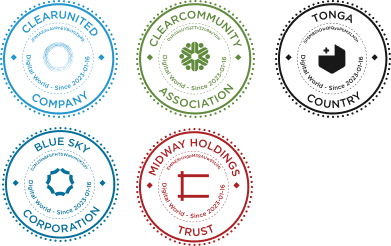
Every Digital Organization uses one of the structures below. These are distinct from Digital Corporations - a separate, more formal business model - and from open Digital Communities you can join without registering a formal structure.
A membership-based organization with agreed rules and shared decision-making, commonly used by clubs, professional groups, schools, and advocacy organizations.
A group of members organized around a shared interest or goal, with lighter-weight membership than a formal legal structure.
A for-profit business entity you register to offer products or services, manage ownership, and operate under defined governance.
An organization governed directly by its members' votes, rather than through a fixed board or single owner.
A structure for holding assets and specifying when, how, and to whom they are distributed to designated beneficiaries.
A structure for government and public-sector bodies establishing an official presence on the network, distinct from the geographic Digital Regions that residents and communities join.
Disclaimer: These structures are organizational models within Digital World, not automatically recognized legal entities. Forming a legally recognized association, company, trust, or other entity is a separate process governed by the laws of your jurisdiction.
Once your organization is registered, these are the areas you manage day to day.
Defined roles that determine what each member can do on behalf of the organization, from ordinary members to founders or officers.
Controls for granting, reviewing, and revoking what members, services, or agents are allowed to do within the organization.
The rules your organization uses to make decisions, such as voting, officer approval, or delegated authority.
A Digital Identity for the organization itself, separate from the personal identities of its individual members.
Verifiable credentials the organization can issue to members, such as roles, memberships, or certifications.
Messaging tools for members to communicate with each other and with the organization directly.
Shared tools and spaces for members to work together on the organization's activities and decisions.
Day-to-day administration, including membership records, roles, and organization settings, from one place.
Digital World is the underlying network your organization runs on. Every Digital Organization uses the same identity, credential, and governance systems as individual members, so an organization's identity, roles, and decisions are verifiable in the same way a person's are.
Within that network, your organization connects outward: to Digital Regions for jurisdiction, Digital Providers for services, and Digital Councils to take part in shaping the rules - set out in the Declaration of Unity - that all organizations operate under.
Digital Organizations aren't limited to for-profit businesses. The same registration, governance, and identity tools apply whether you're running a company, a nonprofit, a government office, a school, or a community group.
Register a Digital Company to manage ownership, operations, and customer-facing services.
Register a Digital Association to formalize membership and shared decision-making.
Register a Digital Country structure to establish an official presence on the network.
Register a Digital Association to manage staff, students, and the credentials they earn.
Register a Digital Community, or keep an informal group within Digital Life.
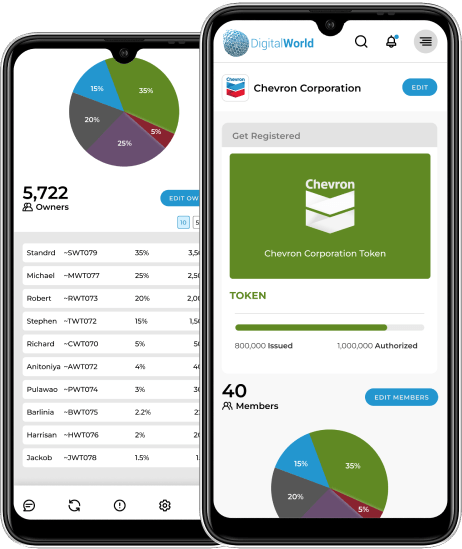
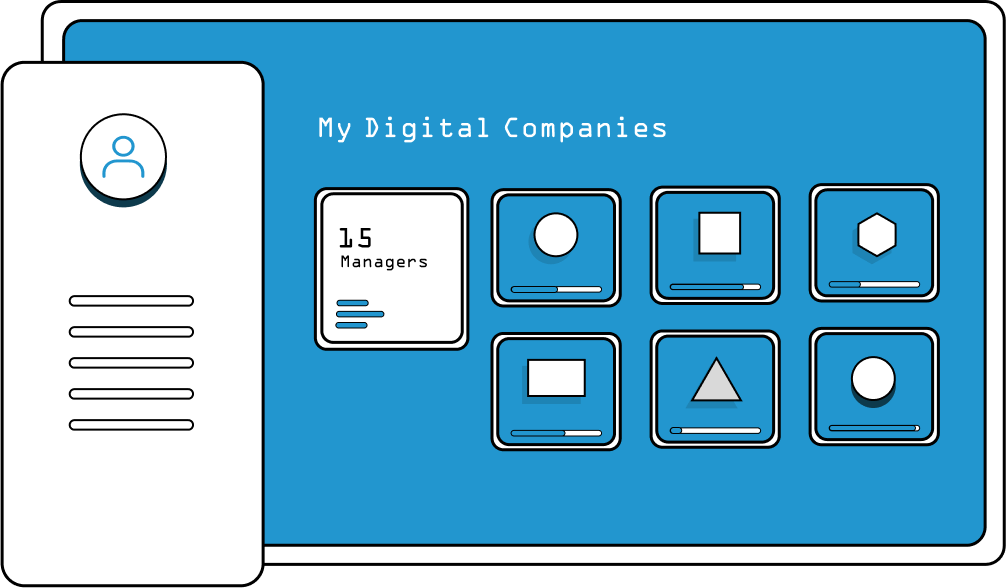
Your organization's dashboard gives you a real-time view of its own activity - membership changes, roles and permissions, governance decisions, and the credentials your organization has issued - all in one place your members can verify.
From registration to day-to-day operation, here's how to set up your organization.
Register your organization, choose a structure - such as an association, company, DAO, trust, or community - and set up its Digital Identity.
Invite people to join using their own member identity, so who's part of the organization can be verified.
Set who can act on behalf of the organization, and what each role is permitted to do, from ordinary members to officers.
Connect your organization to the participating services and providers it needs to operate.
Any member with a Digital Identity can register an organization. Businesses, nonprofits, schools, communities, and government bodies can all create one.
Yes. Each member joins an organization using their own Digital Identity, so their role and actions within the organization can be verified.
A Digital Organization is the general umbrella, covering associations, communities, companies, DAOs, trusts, and country structures. A Digital Corporation is a separate, more formal business structure with its own governance rules.
That depends on the governance rules your organization set up when it registered. Check your organization's own rules before assuming a structure change is possible.
Yes. Roles and permissions can be reviewed and revoked by whoever holds the authority to manage the organization.
No. Digital Trust, Digital Company, and the other structures listed above are organizational models within Digital World, not automatically recognized legal entities. Forming a legally recognized trust, company, or other entity is a separate process governed by the laws of your jurisdiction.
Register your organization today, or explore the available structures to find the one that fits your business, nonprofit, community, school, or government body.